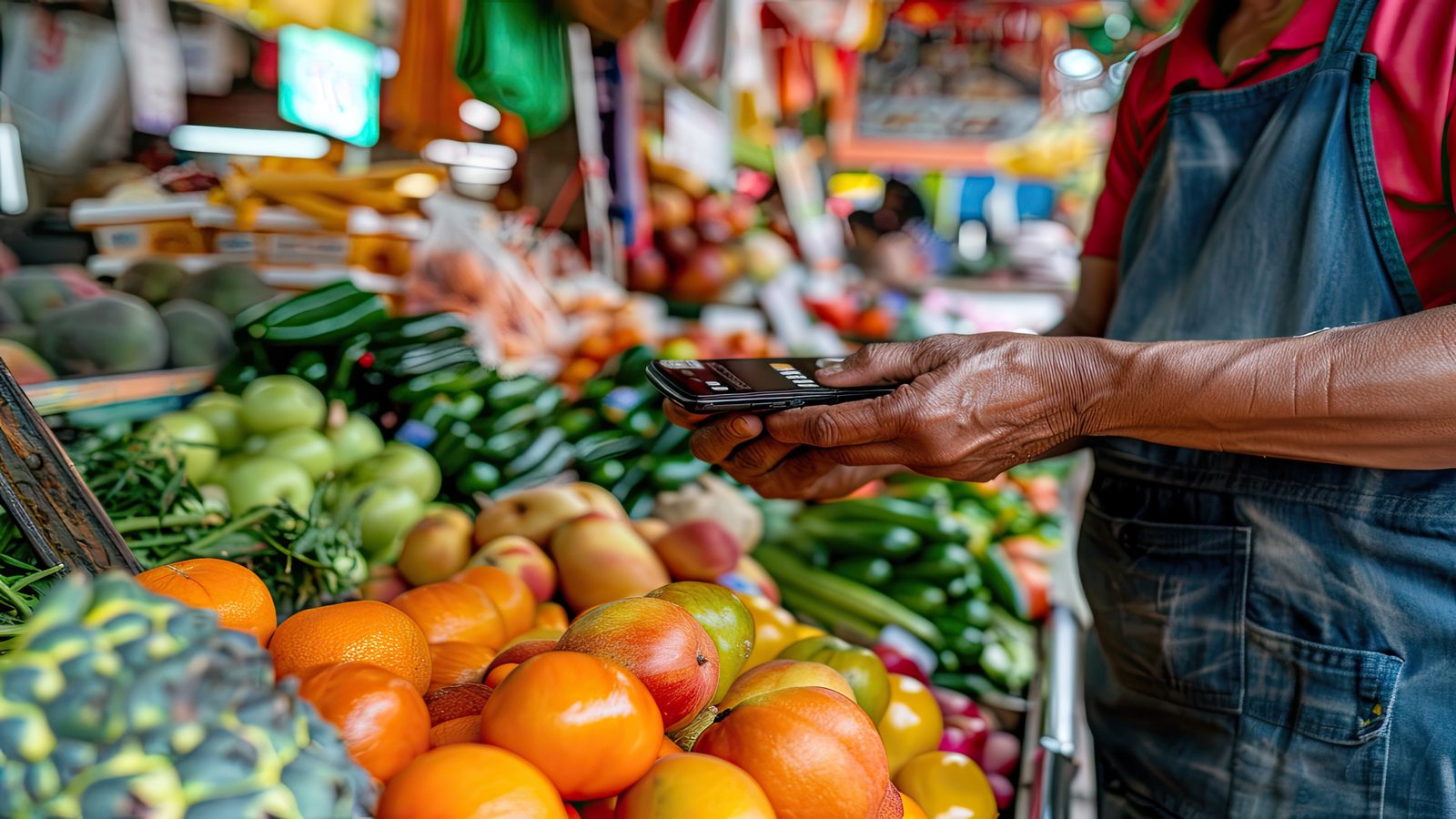
Bitcoin adoption in Africa is shaped by access, trust, and practical utility, not ideology. In this guide, we break down how community education, merchant onboarding, Lightning payments, and financial literacy fit together in real settings, drawing on field-based examples and published research rather than broad crypto marketing claims. We cover the key barriers to adoption, the most promising circular economy patterns, what beginners actually need to start safely, and why local context shapes every aspect of how Bitcoin lands in a new community.
This is one of the core resource pages on Bitcoin Dua, connected to our projects, resources, and the companion guide on financial inclusion and digital cash.
Why Africa Is a Significant Context for Bitcoin
Africa’s relationship with digital financial tools has developed in a way that makes it a genuinely interesting context for Bitcoin. Mobile money networks like M-Pesa in Kenya, MTN Mobile Money across West Africa, and similar services in Tanzania, Ghana, Uganda, and Zimbabwe reached hundreds of millions of users before traditional banking infrastructure caught up. For a significant portion of African adults, the mobile phone is the primary financial device.
According to the World Bank’s Global Findex Database, sub-Saharan Africa has the highest rate of mobile money account ownership of any global region. This matters for Bitcoin adoption because it means the conceptual leap, that money can move digitally on a phone without a bank branch, is one that many potential users have already made. The question is not whether digital money is possible. The question is whether Bitcoin specifically offers something that existing tools do not.
The honest answer is: sometimes yes, sometimes no, and the difference matters.
What Bitcoin Offers That Mobile Money Does Not
Mobile money is excellent for local transactions. It is fast, familiar, widely accepted, and backed by infrastructure that most residents trust because they have used it successfully for years. In this context, Bitcoin does not compete well as a local payment tool unless significant merchant adoption has occurred.
Bitcoin’s practical advantages in African contexts tend to concentrate in specific use cases:
International remittances. Sending money across borders through mobile money, bank transfers, or traditional remittance services involves fees that can reach seven to ten percent of the transferred amount. For families where international transfers represent a significant portion of household income, this is a real cost. Bitcoin and Lightning Network payments can move money across borders for a fraction of that cost and settle in minutes rather than days.
Savings in a scarce asset. In countries experiencing high inflation or currency instability, holding savings in local currency carries substantial purchasing power risk. Bitcoin, despite its own volatility, has appealed to some savers as an alternative store of value in contexts where local currency has historically lost value rapidly.
Censorship resistance. In some political contexts, individuals face risks from financial surveillance or asset freezes. Bitcoin’s permissionless nature is not primarily a consumer convenience; it has genuine relevance for activists, journalists, and others whose financial activity may attract unwanted attention.
Micropayments. Bitcoin’s Lightning Network enables payments too small to be practical through most traditional payment systems. For digital content creators, service workers, or anyone seeking to be paid for very small units of value, Lightning opens up transaction sizes that were previously uneconomical.
Key Barriers to Adoption
Understanding why adoption is not faster is as important as understanding why it exists at all.
Internet access and device cost. Lightning wallets require a smartphone and an internet connection. In rural and low-income urban areas, both remain real barriers. Feature phone users are almost entirely excluded from Lightning-based Bitcoin use without significant infrastructure changes.
Education gap. Bitcoin is technically complex enough that without proper education, new users make costly mistakes. Lost wallet access, sending funds to wrong addresses, and falling for scams are all common among users who enter without adequate preparation. The education gap is the single most tractable barrier, which is why community workshop programmes are central to any realistic adoption strategy.
Scam saturation. In many communities, the word “Bitcoin” is associated primarily with fraudulent investment schemes rather than legitimate financial tools. This is not irrational. Crypto-related scams have caused significant financial harm across Africa, and rebuilding trust in the word requires consistent, honest, and unhurried education that demonstrates Bitcoin’s practical value without promising unrealistic returns.
Volatility. Bitcoin’s price volatility is a genuine problem for merchants and anyone who cannot absorb currency risk. This barrier can be partially addressed through tools that convert Bitcoin to local currency immediately at the point of sale, but that requires familiarity with those tools and trust that the conversion process is reliable.
Regulatory uncertainty. The legal status of Bitcoin varies across African countries. Some have welcomed it, others have issued warnings, and a few have moved toward outright restrictions. This uncertainty creates hesitation among merchants and users who want to operate within the law but are not sure where the boundaries are.
What Community-Based Adoption Looks Like
The most resilient adoption patterns are community-based rather than individually driven. When a small cluster of merchants in a single market or neighbourhood accepts Bitcoin, and a corresponding group of users knows how to pay them, a micro-ecosystem develops. The local circular economies project documents what this looks like in practice.
Community workshops that use the Bitspenda framework create practical familiarity quickly. Participants who have completed even a single session where they received and sent small amounts have a fundamentally different relationship with the technology than those who have only read about it.
The pattern that seems to work best:
- A trusted community figure runs an introductory workshop
- Participants practice with tiny amounts in a safe, facilitated setting
- A local merchant or two is onboarded around the same time
- Participants use their new knowledge at those merchants
- Word spreads through the existing social network, not advertising
This is slow. It is not the fast hockey-stick growth curve that Bitcoin advocates sometimes imagine. But it is genuine, and it is sustainable.
Comparison: Bitcoin vs Mobile Money for Common Use Cases
| Use Case | Bitcoin (Lightning) | Mobile Money |
|---|---|---|
| Local small purchase | Good where merchants accept | Excellent, universal acceptance |
| International remittance | Excellent, low cost | Limited, often high cost |
| Savings from inflation | Usable, but volatile | Subject to local currency risk |
| Peer-to-peer payment | Fast, low fee | Fast, familiar, widely understood |
| Merchant settlement | Requires conversion or comfort with Bitcoin | Settled in local currency |
| New user learning curve | Steep, requires education | Familiar to most mobile money users |
Regional Variation
Adoption patterns vary significantly across African regions and countries, reflecting differences in regulatory environment, existing mobile money penetration, and the specific communities doing education and onboarding work.
In East Africa, where mobile money is most deeply embedded, Bitcoin adoption is building on an existing foundation of digital financial familiarity. In West Africa, remittance corridors have been a particularly strong driver of interest. In Southern Africa, inflation-related savings concerns have motivated some adoption. These are broad patterns, not universal descriptions.
Every community context is specific. An approach that works in a mid-sized city with reliable 4G coverage and an active workshop facilitator network may not be appropriate for a rural area with intermittent connectivity and no prior Bitcoin experience.
Frequently Asked Questions
Does Bitcoin replace mobile money? Not in practical terms. Mobile money serves local transactions well and is trusted. Bitcoin serves different use cases better, particularly international remittances and peer-to-peer payments across currency boundaries. The tools are complementary more than competitive.
What is the best Bitcoin wallet for African users? The best wallet depends on context, device type, and use case. We do not recommend specific wallet products by name, but our beginner safety guide covers what features to look for.
Is Bitcoin legal in my country? Legal status varies significantly. The guide on Bitcoin and financial inclusion touches on the regulatory landscape but cannot provide legal advice. Check your country’s central bank or financial regulator for current guidance.
How do remittance savings actually work? Our Bitcoin and remittances guide covers this in detail, including how to calculate the actual cost difference and what tools enable lower-cost corridors.
Further Reading
For community organisers working in this space, the community meetup playbook is the most practical resource on this site. For the financial inclusion context, financial inclusion and digital cash provides essential background. For the research landscape on Bitcoin usage globally, research on global Bitcoin usage covers the academic and institutional literature.
Wikipedia’s overview of mobile money in Africa provides useful context on the infrastructure that precedes and shapes Bitcoin adoption in the region.